What Are Cable Protection Cover Tiles and Where Are They Used?
One effective way to improve underground cable safety is by installing cable protection cover tiles. These protective products are designed to provide a physical protective layer above buried cables, helping reduce the risk of accidental damage caused by external activities.
Cable protection cover tiles are widely used in electrical infrastructure, telecommunications, industrial facilities, commercial developments, road projects, and utility installations. They are available in different materials, sizes, and designs depending on the project requirements.
In this guide, we will explain what cable protection cover tiles are, how they work, their different types, major applications, and what to consider when selecting the right cable protection solution.
What Are Cable Protection Cover Tiles?
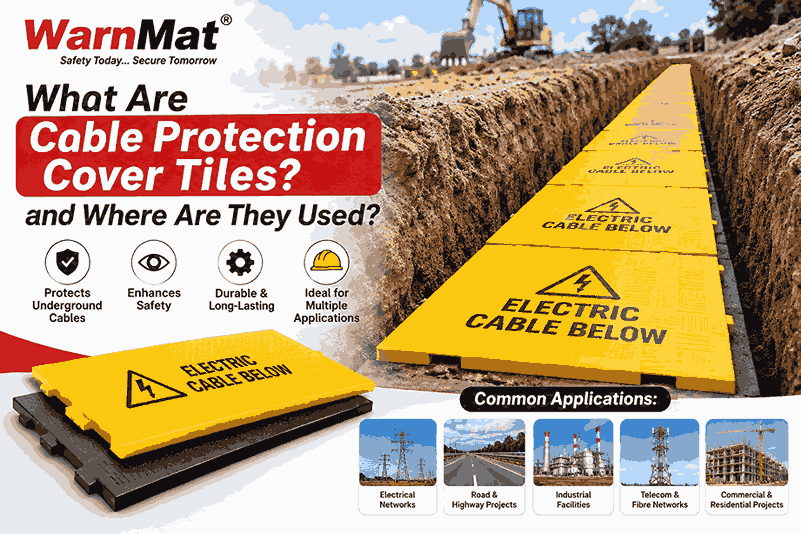
Cable protection cover tiles are protective covers installed above underground electrical, power, and communication cables to provide an additional layer of physical protection.
They are generally manufactured using materials such as high-density polyethylene (HDPE), other durable plastics, or precast concrete, depending on the intended application and required protection level.
These tiles are placed above buried cables during underground cable installation. Their primary purpose is to help protect underground utility networks from accidental contact, excavation activities, and certain external mechanical impacts.
Many cable protection covers also feature warning messages, identification markings, or distinctive colours to alert workers and excavation teams to the presence of underground cables.
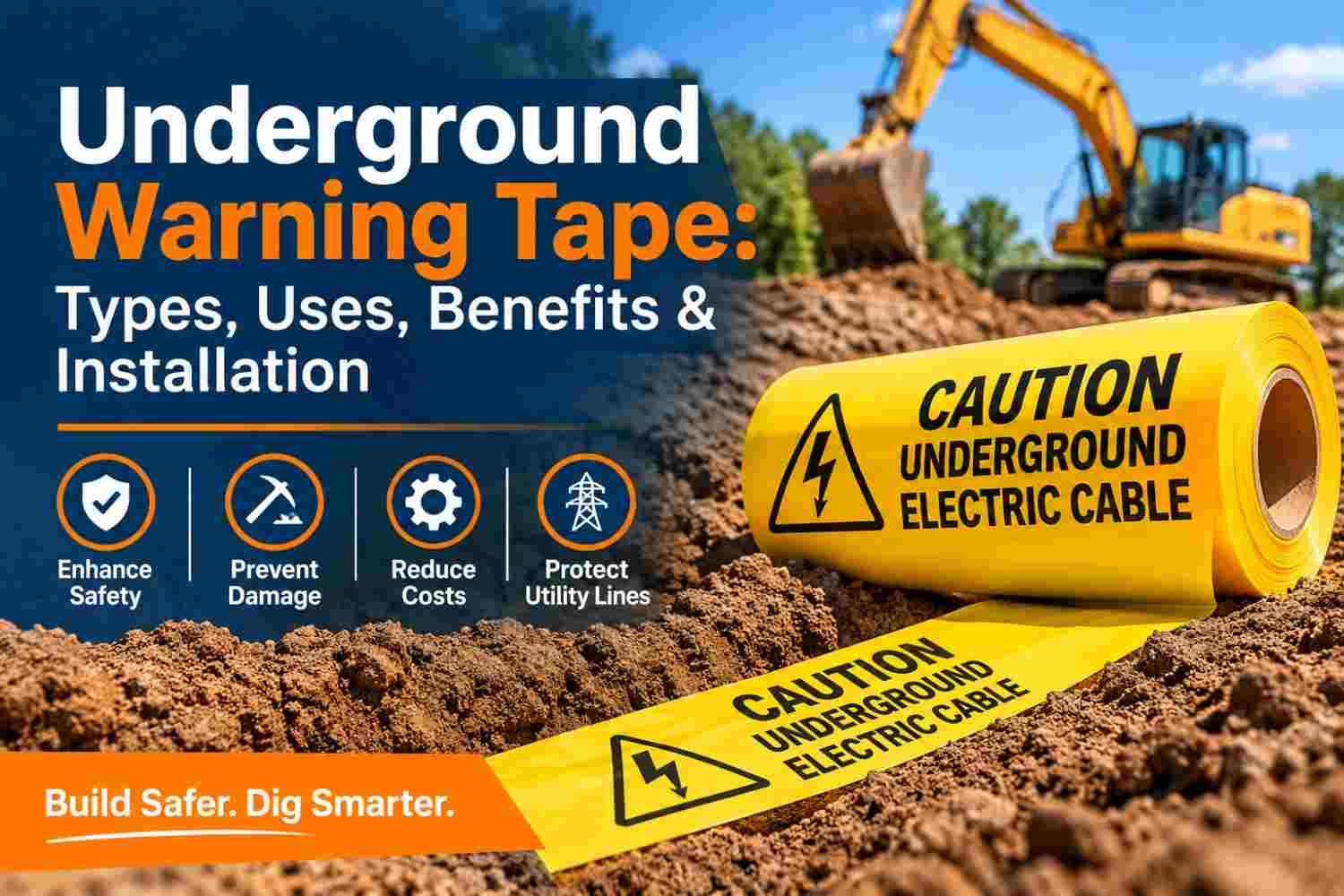
Unlike underground warning tape, which primarily provides a visual warning, cable protection cover tiles offer a physical protective layer.
Why Are Underground Cable Protection Cover Tiles Important?
Underground cables are often installed beneath roads, footpaths, industrial premises, residential developments, and public infrastructure. Once buried, their exact location may not always be visible to workers carrying out future excavation or maintenance activities.
Accidental contact with underground cables can cause electrical hazards, service interruptions, costly repairs, and project delays.
Cable protection cover tiles help address these risks by providing an additional protective barrier above buried utility networks.
Some important benefits include:
1. Additional Physical Protection
Cable protection tiles create a protective layer between underground cables and activities taking place above them. Depending on the material, thickness, and design, they can help reduce the risk of accidental contact and external mechanical damage.
2. Reduced Risk of Accidental Cable Damage
Construction and excavation activities can unintentionally disturb buried electrical cables. Clearly marked and properly installed protective covers help workers identify underground utility routes before digging.
3. Improved Underground Utility Identification
Many protective tiles include warning messages such as "ELECTRIC CABLE BELOW" or other application-specific markings. These messages help communicate the presence and type of underground infrastructure.
4. Long-Term Durability
Quality cable protection covers are designed for underground applications. Depending on their material and specifications, they can offer resistance to moisture, soil conditions, corrosion, and other environmental factors.
5. Support for Infrastructure Maintenance
Clearly identified underground cable routes make future maintenance, repair, and infrastructure development activities easier to plan.
Different Types of Cable Protection Cover Tiles
Cable protection covers are available in different materials and configurations. The appropriate option depends on cable type, installation depth, ground conditions, project specifications, and the level of physical protection required.
1. HDPE Cable Protection Cover Tiles
HDPE cable protection covers are manufactured using high-density polyethylene, a durable thermoplastic material widely used in industrial and infrastructure applications.
These covers can offer several advantages:
-
Lightweight construction for easier handling.
-
Resistance to moisture and corrosion.
-
Good impact resistance, depending on thickness and design.
-
Suitability for various underground utility applications.
-
Availability in different sizes and identification designs.
HDPE cable protection covers are commonly considered for electrical cable networks, telecommunications infrastructure, and other underground utility installations.
2. Plastic Cable Protection Tiles
Plastic cable protection tiles are used in projects where lightweight and durable underground protection solutions are required.
They can be manufactured in different shapes, thicknesses, colours, and dimensions according to project specifications.
Their suitability depends on the material composition, load requirements, and environmental conditions.
3. Precast Concrete Cable Protection Cover Tiles
Precast concrete cable protection covers are manufactured using concrete and are generally selected for applications requiring a more substantial physical protective structure.
They may be suitable for certain industrial, utility, and infrastructure projects where the project design specifies concrete protection.
However, their weight, installation requirements, and mechanical performance should be evaluated before selection.
Where Are Cable Protection Cover Tiles Used?
Cable protection cover tiles are used across different industries wherever underground electrical or communication cables require additional protection.
Here are some of their major applications.
1. Underground Electrical Cable Networks
Electrical distribution networks often use underground cables to supply power to residential areas, commercial buildings, industrial facilities, and public infrastructure.
Protection covers are installed above buried electrical cables to help reduce the risk of accidental damage during future excavation and maintenance work.
They are particularly relevant to:
-
Underground power distribution systems.
-
Electrical substations and utility networks.
-
Commercial building developments.
-
Residential infrastructure projects.
-
Industrial electrical installations.
2. Road Construction and Highway Projects
Road construction frequently involves excavation, trenching, drainage installation, and other ground-disturbing activities.
Underground electrical cables may run beneath roads, service lanes, footpaths, and highway corridors.
Cable protection tiles can provide an additional protective layer above these cables, helping construction teams identify and protect existing utility infrastructure.
3. Industrial Facilities and Manufacturing Plants
Manufacturing facilities depend on electrical networks to operate machinery, production equipment, lighting, and control systems.
Underground cables may connect different buildings, equipment areas, distribution panels, and utility installations.
Cable protection covers are useful in industrial environments where maintenance, equipment installation, and infrastructure upgrades may involve ground excavation.
4. Telecommunications and Fibre Optic Networks
Telecommunication infrastructure depends on underground cables to provide internet connectivity, telephone services, and data transmission.
Fibre optic cables are particularly important because accidental damage can interrupt communication services and require specialized repair work.
Appropriately specified cable protection covers can help protect these networks and make underground utility routes easier to identify.
5. Commercial and Residential Development Projects
Modern residential and commercial developments often use underground electrical and communication networks to maintain organized utility infrastructure.
Cable protection covers may be installed in:
-
Residential townships.
-
Shopping complexes.
-
Office developments.
-
Educational institutions.
-
Hospitals and healthcare facilities.
-
Commercial infrastructure developments.
Their use depends on project requirements and applicable installation standards.
6. Power Plants and Energy Infrastructure
Power generation facilities and energy infrastructure projects involve extensive electrical cable networks.
These installations may require additional protection for underground power connections, control cables, and communication systems.
Cable protection tiles can form part of a broader underground cable protection system designed around the project's technical requirements.
Cable Protection Cover Tiles vs. Underground Warning Tape
Cable protection cover tiles and underground warning tape are both used to improve underground utility safety, but they perform different functions.
Understanding the difference helps contractors and engineers select appropriate protection materials.
| Feature | Cable Protection Cover Tiles | Underground Warning Tape |
|---|---|---|
| Primary purpose | Physical protection | Visual warning |
| Installation | Above buried cables | Above cables at a specified warning depth |
| Material | HDPE, plastic or concrete | Plastic film, detectable or non-detectable materials |
| Main function | Helps reduce accidental physical damage | Alerts excavation workers to buried utilities |
| Identification | May include printed warning messages | Usually includes warning text and colours |
| Typical applications | Electrical and communication cable routes | Electrical, gas, water and other utility routes |
Both products can be used together as part of a comprehensive underground utility protection system. Their installation positions and specifications should follow the project design and relevant utility requirements.
How Are Cable Protection Cover Tiles Installed?
Correct installation is important to ensure that cable protection covers perform as intended.
Although installation procedures vary depending on the product and project specifications, the general process includes the following steps:
Step 1: Prepare the Cable Trench
Excavate and prepare the trench according to the approved cable installation design. Ensure that the trench dimensions and bedding arrangements meet the project requirements.
Step 2: Install the Underground Cables
Lay the cables at the specified depth and maintain the required spacing, alignment, and separation from other utilities.
Step 3: Complete the Required Initial Backfilling
Place suitable backfill material around and above the cables according to the approved installation method.
Step 4: Position the Protection Tiles
Install the cable protection covers above the cable route at the specified location and orientation. Ensure that the covers provide the intended coverage and do not damage the cables.
Step 5: Check Alignment and Identification
Verify that the protective covers are correctly positioned and that warning messages or identification markings are visible where applicable.
Step 6: Complete Backfilling
Finish the backfilling and compaction process according to the engineering specifications and approved construction practices.
Installation should always be carried out by qualified personnel following the relevant electrical safety regulations, project drawings, and manufacturer recommendations.
How to Choose the Right Cable Protection Cover Tiles
Selecting the right cable protection covers requires careful consideration of the project environment and technical requirements.
Before purchasing, consider these important factors:
Material Quality: Choose a material suitable for the expected underground conditions, moisture exposure, and mechanical requirements.
Dimensions and Thickness: Check the required tile length, width, thickness, and coverage area according to the project specifications.
Mechanical Performance: Evaluate the required impact resistance, loading conditions, and other mechanical properties.
Warning Identification: Select covers with suitable warning messages, colours, and identification markings.
Application Requirements: Electrical cables, communication networks, and industrial utility installations may have different protection requirements.
Manufacturer Reliability: Work with a manufacturer that can provide consistent product quality, technical specifications, and customized solutions when required.
Why Choose WarnMat for Cable Protection Cover Tiles?
WarnMat, a brand of V4You Group, offers underground utility protection products designed for electrical, telecommunications, and infrastructure applications.
With experience in manufacturing and supplying industrial plastic products and underground utility identification solutions, the company focuses on providing products that meet different project requirements.
WarnMat's product range includes underground warning tapes, cable protection cover tiles, underground warning mesh, detectable warning tapes, barricade tapes, and other utility protection products.
Customers can discuss their requirements based on product type, dimensions, material, warning message, quantity, and intended application.
For contractors, infrastructure developers, electrical companies, and distributors, selecting the appropriate underground cable protection product is an important part of planning reliable utility installations.
Contact WarnMat to discuss your cable protection cover tile requirements and request product information or a quotation.
Frequently Asked Questions (FAQs)
1. What is the main purpose of cable protection cover tiles?
Cable protection cover tiles are installed above underground cables to provide an additional physical protective layer. They help reduce the risk of accidental cable damage during excavation, construction, and maintenance activities.
2. Which materials are used to manufacture cable protection cover tiles?
Common materials include HDPE, other durable plastics, and precast concrete. The appropriate material depends on the application, mechanical requirements, and project specifications.
3. Where are underground cable protection tiles commonly used?
They are commonly used in underground electrical networks, telecommunications infrastructure, industrial facilities, road construction, commercial developments, residential projects, and power infrastructure.
4. Are HDPE cable protection covers suitable for underground applications?
HDPE covers can be suitable for various underground applications because of their durability, moisture resistance, and corrosion resistance. However, their suitability depends on the product design, thickness, mechanical performance, and installation conditions.
5. What is the difference between cable protection tiles and warning tape?
Cable protection tiles provide a physical protective layer above buried cables, while underground warning tape primarily alerts excavation workers to the presence of underground utilities. Both can complement each other in an underground cable protection system.
6. Can cable protection cover tiles be customized?
Depending on the manufacturer's capabilities, cable protection covers may be available in different dimensions, thicknesses, colours, materials, and warning messages to meet specific project requirements.
7. How do I choose a reliable cable protection cover tile manufacturer in India?
Evaluate the manufacturer's product range, material specifications, manufacturing consistency, quality documentation, customization capabilities, and ability to meet your project quantity and delivery requirements.
Conclusion
Cable protection cover tiles are an important component of underground utility protection. They provide an additional physical protective layer above buried electrical and communication cables, helping reduce the risk of accidental damage during construction, excavation, and maintenance activities.
From road construction and industrial facilities to telecommunications networks and commercial developments, these products support safer and more organized underground infrastructure.
Choosing the right cable protection cover requires attention to material quality, dimensions, mechanical performance, installation requirements, and project-specific specifications.
If you are looking for reliable underground cable protection solutions, explore the range of products available from WarnMat by V4You Group and contact the team to discuss your project requirements.